



Wealth Matters Newsletter - July 2026
Staying Invested in Shifting Markets
Written by: Mark P. Bernier, CFA, Senior Vice President/Wealth Management Officer, Jonathan M. Williams, CFA, CFP®, Vice President/Trust Investment Manager, Zachary S. Herigan, Trust Portfolio Manager
The first half of 2026 so far has proven to be very similar to the first half of 2025; markets sold off heavily due to an exogenous shock – Liberation Day Tariffs in 2025 and the Iran Conflict in 2026 – followed by a strong recovery in financial markets supported by stellar corporate earnings. Nevertheless, both timeframes serve as textbook examples of support towards our consistent messaging to clients: Stay Invested!
Fragile Peace in the Middle East
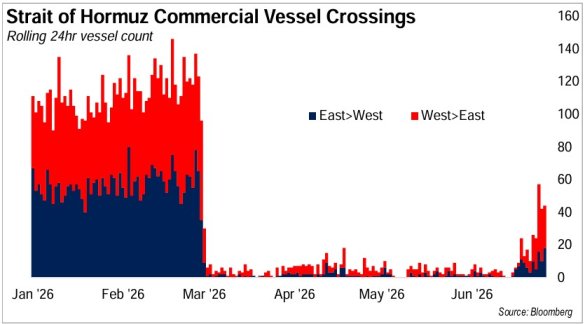
The Iran Conflict continued from the end of February until recently a memorandum of understanding between the U.S. and Iran was signed, effectively establishing a 60-day ceasefire window for negotiations, while immediate action such as the reopening of the Strait of Hormuz and the removal of the U.S. naval blockade was lifted. Only time will tell if a concrete deal can be reached that irons out some of the thornier issues between the two nations pertaining to the future of Iran’s nuclear program, as well as the Strait of Hormuz remaining open for good without any fees paid to Iran for passage through the international waterway. At the time of this writing, the Strait has been effectively reopened with maritime traffic resuming at a fraction of the volume versus before the war. Investors will be watching closely as the flow of oil ramps back up in the Middle East and countries across the globe begin to replenish diminished strategic petroleum reserves that were heavily drawn on to supplement the oil supply shock that resulted from the conflict.
The Warsh Era Begins at the Fed
Jerome Powell’s tenure as chairman of the Federal Reserve has come to an end as Kevin Warsh has taken his place amidst a Federal Open Market Committee (FOMC) divided between hawks and doves. Warsh was selected by President Trump to lead the U.S. central bank prior to the conflict in the Middle East and the resulting global energy supply shock and surging energy prices. Coming into 2026, interest rate futures had priced in two Fed Funds rate cuts as inflation had been slowly decelerating and job creation had stagnated. Now, as Warsh begins his post as Fed Chair, the script has seemingly been flipped: rate hikes are being priced in later this year as inflation has been accelerating and the jobs market has gained positive momentum.

In response to these shifting dynamics, the FOMC entered a monumental operational and philosophical transformation. New Fed Chair Kevin Warsh took the helm of the U.S. Central Bank with a definitive message focused entirely on bringing inflation down. Warsh has launched a clear new direction for the Fed by eliminating forward guidance, issuing a highly condensed policy statement, and signaling an eventual end to the traditional dot plots in which Fed members cast their future rate forecasts. Furthermore, new task forces are being implemented to investigate Fed functions to improve the bank's operations, including a specific mandate to examine whether artificial intelligence productivity gains will eventually become a downward force on inflation. Despite these initiatives, the FOMC remains deeply split internally between hawks pushing for immediate tightening and doves urging more of a “wait-and-see” approach.
This institutional rift is underscored by a contradictory macroeconomic landscape. Inflation remains well above the 2.0% target, even when considering core metrics that exclude volatile food and energy costs. Job numbers have been accelerating, further increasing the case for rate hikes and neutralizing the main argument for rate cuts, which was a weakening labor market. While unemployment remains historically low, overall GDP growth has remained modest rather than spectacular. For fixed income investors, these elevated interest rates keep bond coupons highly attractive, even as credit spreads remain very narrow. Consequently, we remain duration-neutral as uncertainty over the Fed's ultimate direction persists and we believe there is little value in chasing lower-quality fixed income yields with spreads to U.S. Treasuries historically tight.
Earnings Strength Amid a Complex Macro
While macroeconomic data flashed mixed signals, corporate execution drove impressive levels of profitability. The S&P 500 earnings growth rate reached a staggering 28.8% in the first quarter, representing the highest profit acceleration since the initial COVID recovery boom in 2021. According to FactSet data, the S&P 500 achieved a net profit margin of 14.8%, marking the highest net profit margin ever recorded since the firm began tracking this specific metric in 2009. These blowout results were broad-based and not just contained within Big Tech; multiple underlying sectors contributed to the positive earnings surprises.
This unique combination of relatively elevated interest rates, sticky inflation, and peak profitability triggered a powerful style and cap-size rotation across global equity markets year-to-date. Small cap stocks across the entire style box spectrum emerged as the overall best performers in U.S. equities, while Large Value soundly outperformed Large Growth.
On a sector level, Energy, Industrials, Technology, Real Estate, and Materials dominated the top slots, while Consumer Discretionary, Communication Services, and Healthcare significantly lagged the broader indexes. Internationally, developed market equities traded slightly ahead of the S&P 500, while emerging markets led all global equities, fueled by heavy, continued gains in South Korea and Taiwan.
This market rotation is deeply tied to the artificial intelligence secular trend, which is moving into a capital-intensive physical deployment phase with enormous levels of cash being allocated to datacenter buildout. The “hyperscalers” – Amazon, Alphabet, Oracle, Microsoft, Meta – are continuing to spend heavily on capital expenditures, with a projected $739 billion allocated for 2026 by some estimates.
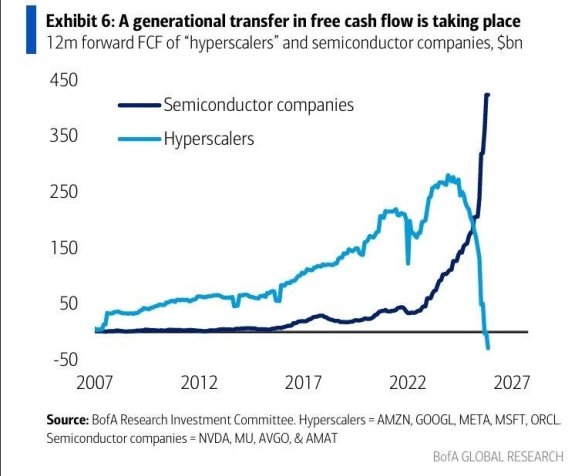
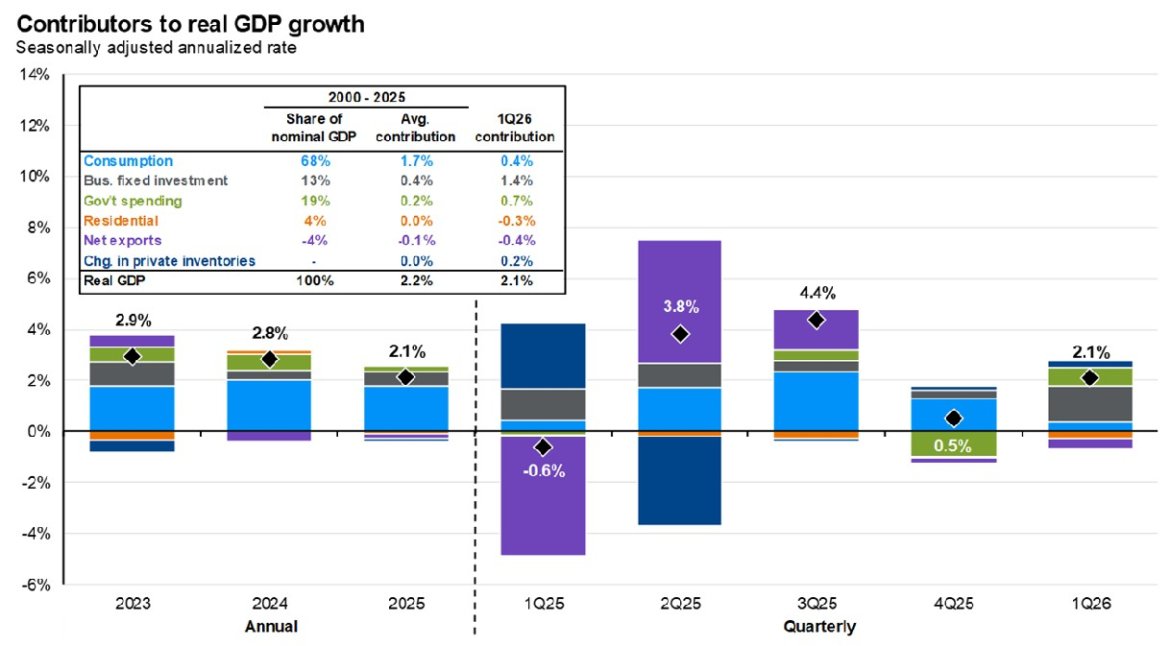
While this massive capital outflow has hurt the near-term stock returns of many of the hyperscalers due to compressed immediate cash flows, it has acted as a primary economic engine, making business fixed investment the single largest contributor to Real GDP growth this quarter. Ultimately, we are observing a distinct market shift away from the hyperscalers themselves. Instead, they are being outperformed by "picks and shovels" infrastructure stocks, including semiconductors, advanced memory chips, specialized liquid data center cooling systems, and high-density electronic connectors and cables.
Final Thoughts
Navigating the remainder of 2026 requires balancing the risks of an energy-driven inflation shock against the backdrop of historic corporate profitability. The Federal Reserve's hawkish pivot under Chair Warsh means interest rates will likely remain higher for longer, favoring our approximately neutral duration fixed income profile. Simultaneously, the market's internal rotation away from overextended growth giants and into small caps, value sectors, international markets, and physical AI infrastructure provides ample opportunities for active asset management. We remain cautiously optimistic for the remainder of 2026.
Read other issues of our Wealth Matters newsletter.
Invest with us. Invest with experience.
Not FDIC-Insured - May Lose Value - Not a Deposit - Not Bank Guaranteed - Not Insured By Any Federal Government Entity.
Contact Us

CONTACT ONLINE
Complete the Wealth Management Contact Form to get started right away.

Contact a Team Member
We have dedicated staff that can assist you with applying right over the phone!
Call to get started now!

VISIT AN OFFICE
Our friendly, knowledgeable office staff can take your application at an office convenient to you.
Use our office locator to find an office near you.