



Enter the Piggy Pageant! Great Savings Habits Start With a Piggy Bank
June 27, 2024
Parents want to prepare their children for adulthood. We want them to be confident and able to create a life that makes them feel happy and secure. Teaching kids about money can help with that. Teaching smart money habits at a young age can help lead to financial success later in life.
If we want our kids to have a healthy relationship with money and learn to be financially responsible adults, we need to guide them. When is it time to talk to your child or grandchild about money? If they are old enough to ask for a toy or a bike, they are old enough to start learning financial lessons that will last a lifetime.
Begin by explaining important concepts such as savings, a budget, and goals and then keep the conversation going. Be open and honest when you discuss your financial experiences and set a good example. The best financial lessons are part of day to day life. Look for opportunities to talk about money, read books and play games that focus on spending money wisely.
Here are some examples of teachable moments to help you get started:
At the Bank
When you go to the bank, bring your children with you and explain how the bank operates, how savings can grow with interest and how an ATM works.
If they are eligible, open a children’s bank account. ACNB Bank offers a Buckley Savers account for kids under 12 and a MyBux account for teens 13-17.
On Payday
Discuss how your salary is budgeted to pay for housing, food and clothing, and how a portion is saved for future expenses such as college tuition, emergency funds, and retirement.
While Shopping
Shopping involves making choices. It’s easy to give clear examples of “needs” and “wants” using different kinds of foods at a grocery store. Healthy food is a need; snack foods are a want. Teach them to stick to a shopping list and avoid impulse purchases. Explain the advantages of comparison shopping, coupons and store brands.
Chores and Allowances
Giving children an allowance can teach them the value of money. Assign chores and give them a dollar value to help them understand work equals financial reward. Discuss ways to budget and divide allowances. Encourage children to set a financial goal, such as saving for a bike, and figure out how to achieve it. Strategies to help them reach their goal faster might include doing extra chores, saving some birthday money or setting up a matching donation once they reach a certain goal.
Using Credit Cards
Explain that credit cards are a loan and need to be repaid. Share how each month a credit card statement and bill are sent to you. Talk about the different types of cards, such as ATM, debit and credit cards.
Planning a Vacation
Whether you are planning a local outing or a major trip, emphasize the value of saving as a family. Set a family savings goal that involves your children. Figure out the cost and discuss ways everyone can help to reach the goal.
ACNB Bank Can Help Start The Savings Habit
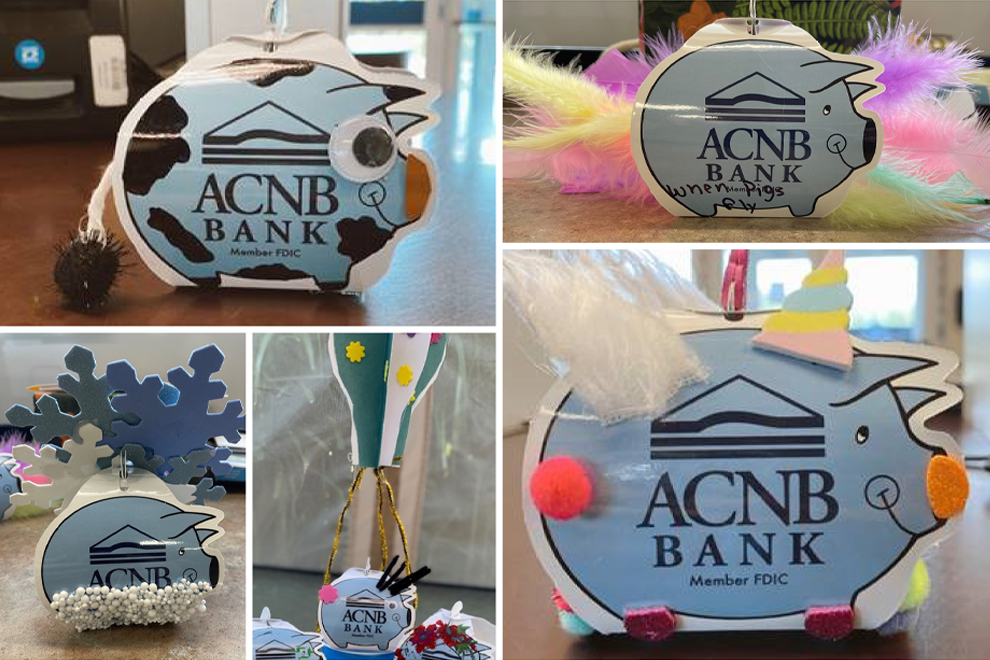
In an increasingly cashless society, a piggy bank can help make saving more visible. Filling a piggy bank with coins and bills helps kids learn the concept of saving. Stop in at one of our community banking offices during the month of July 2024 to pick up a piggy for your kids to decorate and enter our Piggy Pageant. One lucky child will receive $100 to jump start their savings. Saving is easy at ACNB Bank. You can open a Children’s Banking account with as little as $10. Our Buckley’s Savers receive a birthday gift and are invited to participate in fun activities.
Children tend to imitate their parents' personal finance habits. Be an example of a responsible money manager. Talk openly about money and share your values and experiences. Teach your kids the importance of living within their means, which is one of the basic principles of saving. Keep building upon small lessons so they are prepared to make bigger decisions as they move toward adulthood.